Tuesday 17th February 2026
By inAfrika Newsroom
Ethiopian Airlines has reported a 14% rise in half-year revenue to $4.4 billion and said it is expanding capacity with new aircraft and route growth, underscoring the carrier’s central role in Africa’s aviation recovery and long-haul connectivity push.
Reuters reported the results on February 10, citing a press briefing by airline chief executive Mesfin Tasew. The performance covers the first six months of the airline’s financial year that started on July 8, and it comes as several African carriers face aircraft shortages, higher lease costs and foreign-exchange constraints that have slowed network expansion.
Ethiopian Airlines half-year revenue: key details
Reuters said the airline attributed the revenue growth to expanded flight routes, new destinations and the addition of seven aircraft. Ethiopian Airlines operates a fleet of about 150 planes, making it the continent’s largest commercial carrier by scale.
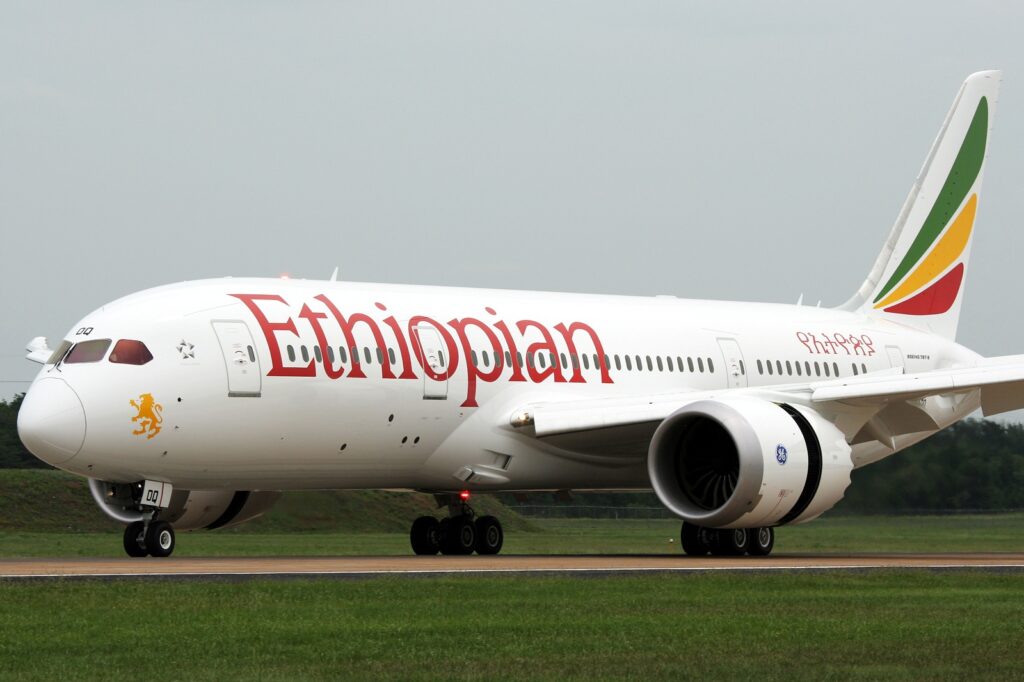
The airline has also confirmed a major widebody order. Ethiopian Airlines said it has confirmed the purchase of nine Boeing 787-9 Dreamliner aircraft, with deliveries planned between 2031 and 2033, in a statement dated January 20. Reuters separately reported the order as part of the carrier’s long-haul growth strategy.
Beyond fleet growth, the airline is pressing ahead with an airport project it has described as transformational for African aviation. Reuters reported that Ethiopian Airlines has begun construction of a $12.5 billion airport project expected to be completed in 2030 and positioned as Africa’s largest upon completion. The project would expand hub capacity for long-haul transit traffic and regional feeder routes, at a time when Addis Ababa competes with Gulf and European hubs for Africa–Asia and Africa–Americas connections.
The airline’s scale gives it outsized influence over regional air links, cargo capacity and tourism flows. For East Africa and the Horn, Ethiopian Airlines’ network often provides onward connectivity to Europe, Asia and North America, while also carrying time-sensitive freight such as horticulture and pharmaceuticals. Capacity shifts at the Addis Ababa hub can ripple into ticket pricing and route availability across neighbouring states. Ethiopian’s reported revenue growth arrives as airline balance sheets remain under scrutiny across the industry, with fuel costs, engine maintenance backlogs and supply-chain delays affecting fleet utilization. Reuters’ report did not provide profit figures in the same update, and this story reports only the revenue and expansion details stated by the airline and cited by Reuters.

 Swahili
  English
  French
  Portuguese
  Chinese