Monday 13th April 2026
By inAfrika Newsroom
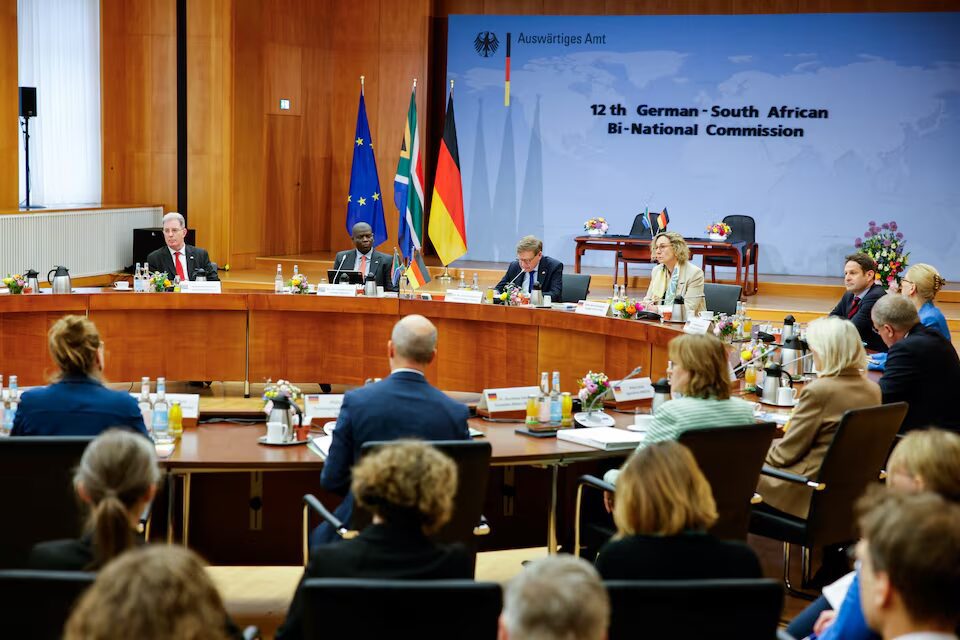
South Africa German climate loan was agreed in Berlin on Monday as South Africa secured a new €200 million concessional loan from Germany to support power grid upgrades and renewable energy projects, while also advancing cooperation on critical minerals and battery value chains.
South Africa’s foreign ministry said the package is designed to strengthen electricity infrastructure at a time when grid performance remains central to growth, investor confidence, and industrial competitiveness. The agreement also comes as South Africa positions itself as a strategic supplier for the clean-energy transition, with policymakers aiming to move beyond raw mineral exports into processing and manufacturing-linked value chains.
In addition to the loan, Germany and the European Union extended more than €270 million in funding support tied to green hydrogen initiatives and development of the battery value chain, according to South Africa’s foreign minister. These programmes often combine project preparation, policy support, and early-stage capital that can help unlock larger private investment when procurement and permitting frameworks are clear.
The Berlin announcement also carried diplomatic significance. South Africa’s foreign minister said Germany’s support matters amid strained relations with the United States under President Donald Trump’s second term, describing South Africa as feeling “included” in the G20 through backing from Germany and other members, despite being excluded by the U.S. administration from certain G20 meetings and the Johannesburg summit.
For Africa’s broader climate finance landscape, the deal reflects a growing preference for blended structures that combine concessional loans, grants, and technical support to address transmission bottlenecks. Across the continent, utilities and governments increasingly identify grid constraints as the main barrier to scaling renewables, even where generation projects are available. If transmission upgrades are delayed, new power cannot be connected at scale, and investment pipelines stall.
South Africa German climate loan in context
South Africa German climate loan arrangements typically depend on project pipelines, procurement integrity, and measurable delivery milestones. The immediate question for business and investors will be how quickly the financing translates into executed grid works, improved connection timelines, and reduced curtailment risk for new renewable projects.

 Swahili
  English
  French
  Portuguese
  Chinese