Wednesday 28th January 2026
By inAfrika Newsroom
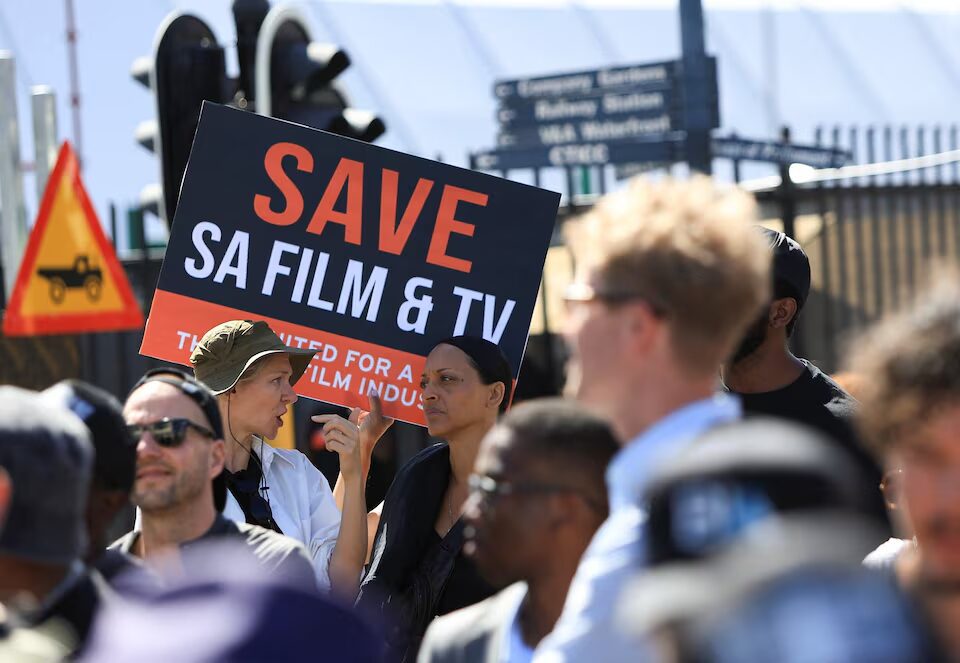
South Africa film funding protests spread on Wednesday as industry workers and producers rallied against what they described as a deepening financing crunch that threatens productions, incomes, and downstream jobs tied to the country’s creative economy.
Reuters reported that demonstrators pointed to declining support and delayed disbursements that have reduced project pipelines, with knock-on effects for freelancers, small production houses, and service suppliers.
South Africa has one of Africa’s most established film and television ecosystems, supported by a mix of private commissioning, advertising, location shoots, and public incentives. Even so, the sector remains exposed to swings in public budgets and investor risk appetite, particularly for early-stage development and independent productions.
Industry figures say the economic footprint goes beyond entertainment. Film work supports hospitality, transport, set construction, wardrobe, security, and technical services, while international shoots bring foreign exchange and skills transfer. When productions stall, the impact spreads quickly across urban labour markets.
The protests also reflect a wider continental debate: how African states should fund culture while balancing fiscal constraints and competing priorities in health, energy, and infrastructure. In several markets, governments have promoted “creative economy” strategies but struggled to maintain predictable financing and transparent grant administration.
For policymakers, the immediate issue is credibility. Funding uncertainty can drive talent migration, weaken training pipelines, and reduce the ability of local firms to compete for streaming-era commissions that demand consistent delivery and rights clarity.
Next steps
South Africa film funding protests are expected to feed into meetings with cultural agencies and treasury officials on disbursement schedules, incentive design, and whether emergency support can stabilise production pipelines.
Why it matters
A weakened South African screen sector would hit jobs and exports, and it would reduce regional capacity in skills, post-production, and high-end service work that other African industries rely on.

 Chinese
  English
  Swahili
  French
  Portuguese