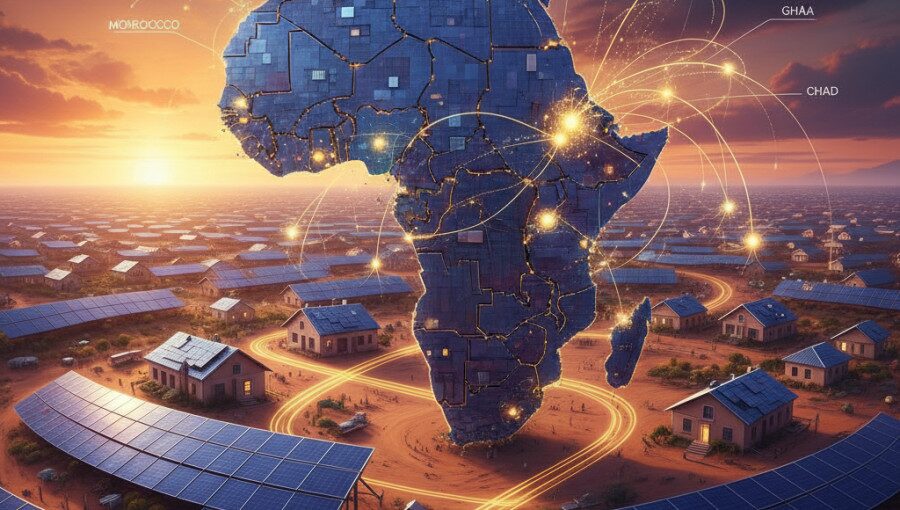
Africa solar capacity growth reached a new high in 2025 after the continent added 4.5 gigawatts of photovoltaic capacity, a 54% increase from the previous year, according to a Reuters analysis that points to accelerating momentum in utility-scale and distributed solar markets.
The expansion reflects a mix of falling equipment costs, policy reforms, and urgent demand for new power supply as economies grow and grids struggle with reliability. Reuters reported that eight African countries each installed more than 100 megawatts of solar capacity in 2025, a sign that the market is broadening beyond a small group of early adopters.
South Africa remained the continent’s solar leader, with a total footprint exceeding 10GW, according to the report. That dominance is linked to both policy design and market urgency, as businesses and households seek alternatives to power constraints. At the same time, Reuters noted that grid infrastructure remains a binding constraint, shaping how quickly new generation can be connected and dispatched.
North Africa is also scaling quickly. Reuters said Egypt has more than 5.5GW under construction and about 13GW in pre-construction, while Algeria is expanding utility-scale projects, underscoring a renewed push for large solar buildouts as governments manage fuel costs and demand growth.
Africa solar capacity growth: key details
Africa solar capacity growth is increasingly being paired with battery storage to extend the value of generation beyond daylight hours. Reuters reported that investment in battery energy storage systems is rising, a shift that matters because it improves grid flexibility and supports solar’s role as a reliable supply contributor rather than a purely daytime resource.
The report also highlighted Africa’s growing role as a destination for Chinese clean energy exports. It said Africa bought about $2 billion of solar modules and $2.6 billion in battery systems in 2025, reflecting both demand and affordability dynamics.
Policy reforms in Nigeria, Kenya, Ethiopia and other markets are helping to expand adoption, according to Reuters, with governments adjusting regulation to improve procurement, private participation, and distribution-level deployment. The direction is significant because regulatory clarity can reduce project risk and lower financing costs, particularly for small and mid-sized developers. The next phase of growth is expected to depend on grid upgrades, permitting speed, and the ability to finance transmission and distribution investments at the same pace as generation additions. Without that, markets risk building capacity that cannot be fully utilised, especially at peak generation hours. Reuters said Africa is poised to become a central player in the global clean energy transition by 2030 if costs keep falling and policy support continues.
Thursday 26th February 2026 By inAfrika Newsroom South Africa higher growth push took centre stage after Finance Minister Enoch Godongwana said the country needs stronger economic growth to attract investment…
Wednesday 5th February 2026 By inAfrika Newsroom OPEC output falls January figures signalled a modest supply tightening after a Reuters survey found the producer group’s oil production declined by 60,000…
Wednesday 4th February 2026 By inAfrika Newsroom Ghana offshore investment limits took effect immediately after the Securities and Exchange Commission imposed new caps on how much local fund managers can…

 English
  Swahili
  French
  Portuguese
  Chinese