Saturday 31st October 2026
By inAfrika Newsroom
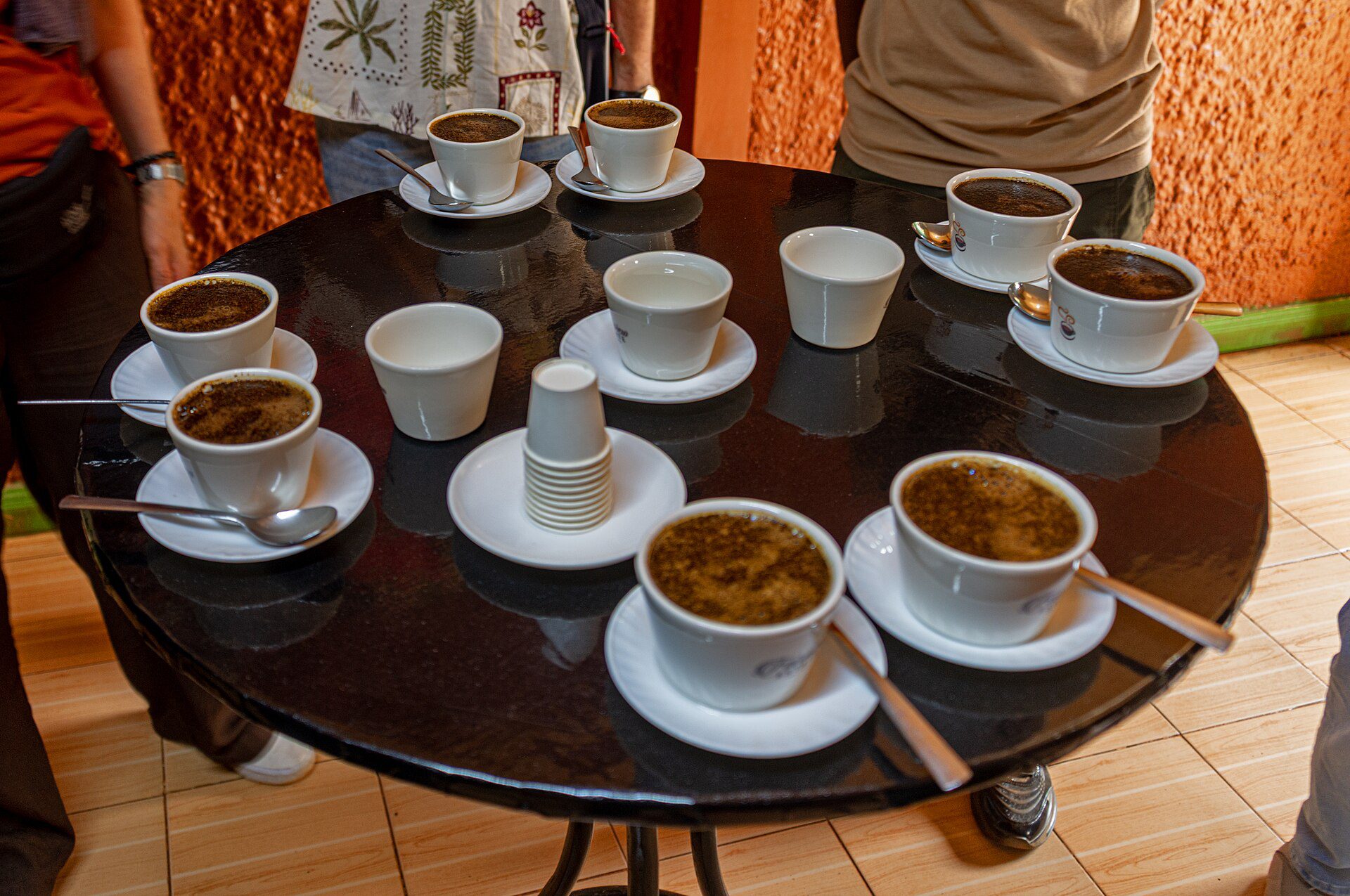
Kenya’s planned national coffee flavour map will draw on blind tastings in Nairobi next month, offering producers another way to describe what distinguishes their crop. The project aims to connect origin and production information with sensory assessments, rather than treating bean size as the complete description of quality.
Les FAO’s programme places the Kenya Coffee Flavor & Origin Expo at Shamba Events Center on 14–16 November. It envisages approximately 300 trained cuppers evaluating up to 500 samples, with the resulting national map scheduled for release in 2027.
The initiative received fresh coverage in Global Coffee Report on 29 October, which says sampling will cover 34 coffee-growing counties. Professional tasting sessions are planned for 15 and 16 November, so neither the completed atlas nor its findings should be treated as available today.
FAO identifies the Coffee Board of Kenya, FAO Kenya and the Kenya Coffee Platform as presenters, with Torch Coffee Kenya as technical partner. Its event page was published in July; the late-October reporting brings renewed attention to that previously announced programme.
The commercial question is how information becomes usable at the point of sale. A cooperative describing a specific coffee’s sensory characteristics can give a buyer more to assess than a physical grade alone, but a county-wide profile cannot certify every lot produced within its borders.
Blind evaluation also helps separate what tasters perceive in the cup from what they expect after seeing an origin label. The eventual map’s usefulness will therefore depend on clear sample information and evaluation methods, not simply the number of counties represented.
Processors and exporters will still need to connect the reference information to identifiable coffee lots. That makes the exercise relevant to the wider challenge of turning agricultural research into practical production and market decisions across East Africa.
Publication of the 2027 map will be the next test of what the exercise establishes. Any price premium or improved farmer return would need separate evidence; a tasting programme does not guarantee either outcome.
Have a verified news development or story? Send news submissions and supporting materials to news@inafrika.co.tz

 French
 English
 Swahili
 Portuguese
 Chinese