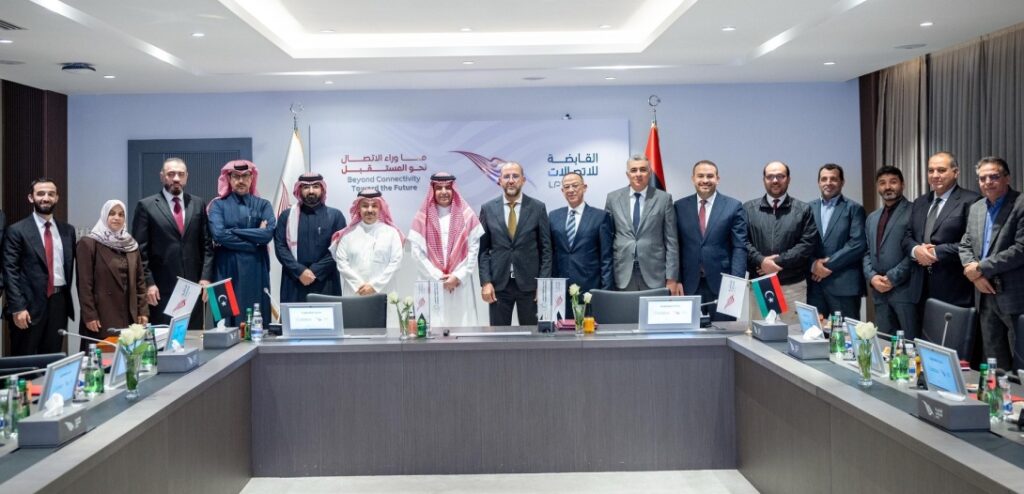
Libya Saudi telecom Africa connectivity 2025 gained momentum after Tripoli signed a preliminary telecoms agreement with Saudi-based Technology Link Services for Telecommunications. The deal, led by Libya’s state Post, Telecommunications and Information Technology Holding Company, aims to position the country as a regional gateway for data traffic into Africa.
The memorandum of understanding was signed in Tripoli during talks between Libyan telecoms chief Youssef Ibrahim Hussein and a visiting Saudi delegation. Discussions covered joint technical studies, expansion of national and urban networks, and assessments of market demand for transmission capacity across Libya and neighbouring states.
Officials say the partnership aligns with Libya’s digital development priorities and longer-term plans to stabilise the economy after years of conflict. The state holding company describes the agreement as part of a wider push to modernise infrastructure and attract regional data transit through Libyan territory.
In addition, the two sides plan to explore a regional connectivity strategy that links Libya more tightly with other North and sub-Saharan African markets. This includes possible new backbone routes, data centres and shared platforms for cloud and enterprise services.
Next steps: Libya Saudi telecom Africa connectivity 2025
Technical teams will now map priority projects, including upgrades to national fibre routes and cross-border links. They will also examine options for landing international cables and expanding Libya’s role in regional traffic exchange.
Both parties intend to draw up a phased investment plan once feasibility studies are complete. This could include joint ventures, vendor financing and partnerships with African carriers. Libyan officials stress that regulatory reform and security improvements must move in parallel, so new infrastructure can operate safely and commercially.
Saudi partners, meanwhile, will evaluate how Libyan projects fit into wider Gulf–Africa digital corridors now emerging around the Red Sea and Mediterranean.
Why it matters
The Libya Saudi telecom Africa connectivity 2025 agreement underlines how digital links are becoming as strategic as oil and ports in North Africa. Better fibre and data routes could cut latency for African businesses, reduce wholesale costs and support new sectors such as fintech, e-government and cloud services. Moreover, a stable Libyan hub could offer an alternative to congested routes, including those disrupted by repeated cable cuts in the Red Sea. For East and Central African states seeking redundancy and price competition, that matters. For Libya, the deal offers a path to non-oil revenue and a signal that investors still see long-term potential in the country’s recovery.
Thursday 29th January 2026 By inAfrika Newsroom AI infrastructure returns is the focus for private equity and long-term investors as attention moves from headline applications to the physical build-out—data centres,…
Thursday 15th January 2026 By inAfrika Newsroom Uganda internet shutdown workarounds spread rapidly this week as Ugandans downloaded an offline messaging app built by Twitter co-founder Jack Dorsey, seeking to…
Saturday 10th January 2026 by inAfrika Newsroom Tanzania has again entered the World Bank’s highest category for digital government maturity. The GovTech Maturity Index (GTMI) 2025 placed the country in…

 French
  English
  Swahili
  Portuguese
  Chinese