Monday 13th April 2026
By inAfrika Newsroom
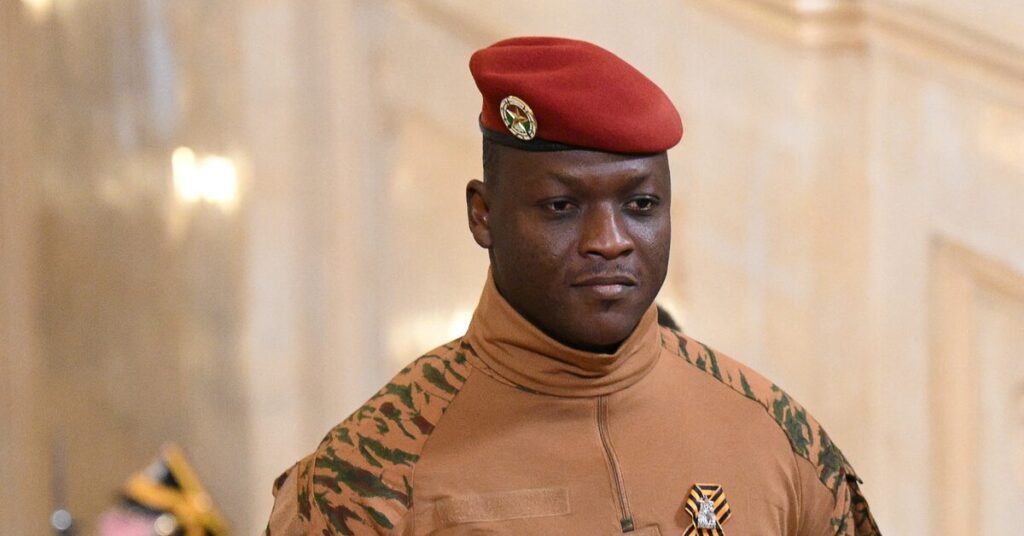
Burkina Faso forget democracy remarks drew regional attention on Friday after military leader Ibrahim Traore told journalists that people should “forget about democracy” and said “democracy kills,” the latest sign of an intent to govern for the long term after taking power in a 2022 coup.
The statement lands in a West African context where several military-led governments have challenged traditional democratic timelines, arguing that security emergencies and state fragility require extended transitional rule. Burkina Faso has faced sustained violence linked to Islamist insurgencies, and the government frequently frames its political model as a necessary response to the threat environment and to perceived failures of past administrations.
Traore’s remarks will be read through two lenses: internal legitimacy and external relations. Domestically, military governments often seek to consolidate authority by appealing to popular frustration over insecurity and economic hardship. Internationally, blunt rejection of democratic governance can complicate relations with partners that condition aid and security cooperation on political transition benchmarks.
The economic stakes are material. Political uncertainty influences investor risk perception, while security conditions affect farming cycles, mining logistics, and trade corridor reliability. In Burkina Faso, where gold exports matter for revenues and foreign exchange, stability is tied to both security outcomes and the predictability of state institutions. When governance signals suggest long-term military rule, investors and lenders often reassess exposure, focusing on contract enforceability and policy continuity.
Within the region, the message also interacts with ECOWAS dynamics. West African regional bodies have struggled to enforce transition timelines amid shifting alliances and security realities. Statements that dismiss democratic models can harden negotiating positions and increase the risk of prolonged diplomatic friction, with potential knock-on effects for cross-border trade and financial flows.
Burkina Faso forget democracy remarks in context
Burkina Faso forget democracy remarks highlight a broader political direction in which the military leadership is signaling a reduced commitment to electoral transition frameworks, even as security and economic pressures remain central.

 Portuguese
  English
  Swahili
  French
  Chinese