Monday 5th January 2026
By inAfrika Newsroom
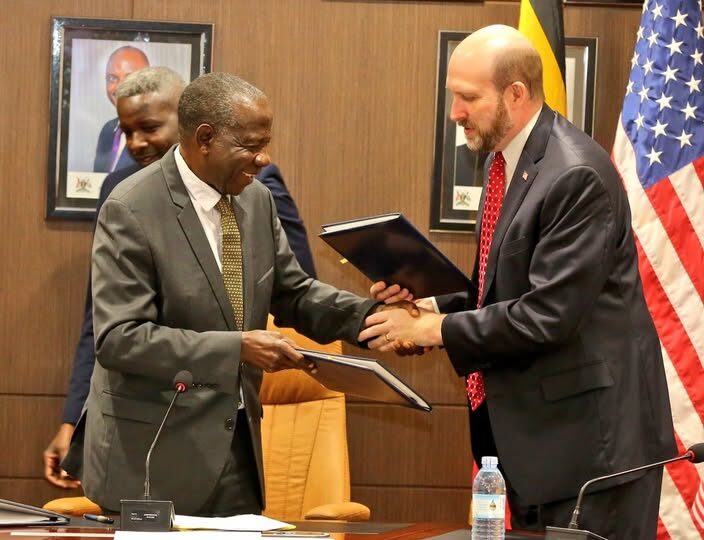
A Uganda US health funding pact will channel up to $1.7 billion of US support to Uganda’s health sector over five years, as Washington shifts aid terms under the “America First Global Health Strategy.” The agreement focuses on infectious disease control and stronger national systems, while also pushing recipient countries toward greater self-reliance.
The US embassy said the funding will back priority programmes including HIV/AIDS, tuberculosis, malaria, maternal and child health, and polio. Therefore, the deal targets both disease outcomes and the systems that deliver services, from clinics to workforce capacity.
Uganda, however, is also being asked to carry more of the burden. The finance ministry said the government will increase its own health spending by $500 million over the framework period. In addition, Finance Minister Matia Kasaija said the collaboration should strengthen institutions and the health workforce, not only specific programmes.
The pact follows similar agreements recently reached with Kenya and Rwanda, according to Reuters. Meanwhile, it lands in a context where US foreign aid has been reduced after budget cuts and the closure of USAID, which had been a major donor vehicle. Consequently, governments that depend on external financing are recalibrating how quickly they can replace donor funds with domestic revenue.
For Uganda, the challenge is execution. So, the credibility of the $500 million domestic commitment will depend on budgeting discipline and predictable releases to the health sector. However, if the funding and reforms align, they could protect core services and reduce outbreak risks.
Next steps — Uganda US health funding pact
Implementation plans will define spending timelines, domestic financing milestones and monitoring. Meanwhile, programme managers will watch how quickly funds reach frontline services and whether system upgrades keep pace with targets.
Why it matters
Health financing shapes survival and productivity. Therefore, a stable five-year framework can protect critical services, but only if domestic funding rises and systems improve, not just budgets on paper.
 Portuguese
  English
  Swahili
  French
  Chinese