 Swahili
  English
  French
  Portuguese
  Chinese
Corruption Is Mortgaging Africa’s Future
Diverted public funds destroy development returns, weaken essential services and deepen economic dependence. Africa needs accountability measured in results.
Friday 24th April 2026
By inAfrika Newsroom
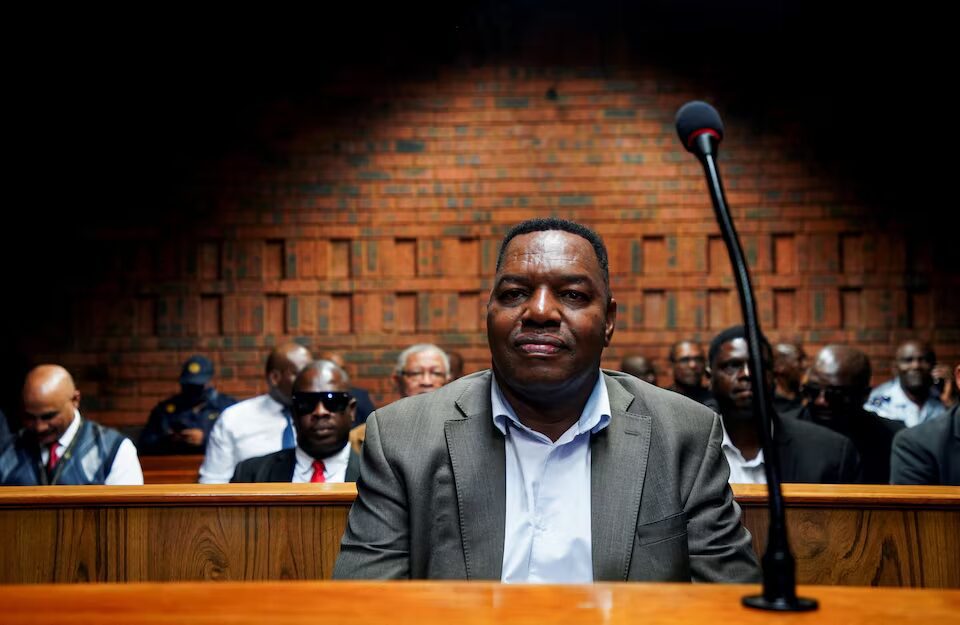
South Africa police tender suspension 2026 has put public procurement back under scrutiny after President Cyril Ramaphosa suspended National Police Commissioner Fannie Masemola. The suspension matters now because trust in state tenders affects service delivery, investors and public finance.
The matter relates to allegations around a 228-million-rand tender, equivalent to about $13.8 million. Prosecutors allege irregularities linked to a contract for health services to the police. Masemola has denied the charges.
Other people charged include businessman Vusimuzi Matlala, whose company Medicare24 won the contract. Matlala and 15 others are accused of corruption, fraud and money laundering. They had not entered pleas at the time of the report.
Ramaphosa appointed Puleng Dimpane as acting police chief while Masemola remains on precautionary suspension. Dimpane had been serving as divisional commissioner for financial management services.
Here is what South Africa police tender suspension 2026 means for procurement and public services. The case will test whether large public contracts can be reviewed without weakening frontline operations.
For businesses, the immediate signal is compliance. Companies bidding for public contracts in South Africa will face stronger pressure to show clean procurement records, beneficial ownership clarity and proper delivery capacity.
For households, the concern is service continuity. Public procurement problems can delay health support, policing services, equipment delivery and administrative efficiency.
For government, the case carries reputational weight. South Africa’s state institutions operate under investor scrutiny because procurement governance affects ratings, borrowing costs and public trust.
The regional angle reaches countries such as Kenya, Tanzania, Nigeria and Ghana, where public procurement reform remains central to infrastructure, health, policing and municipal service delivery.