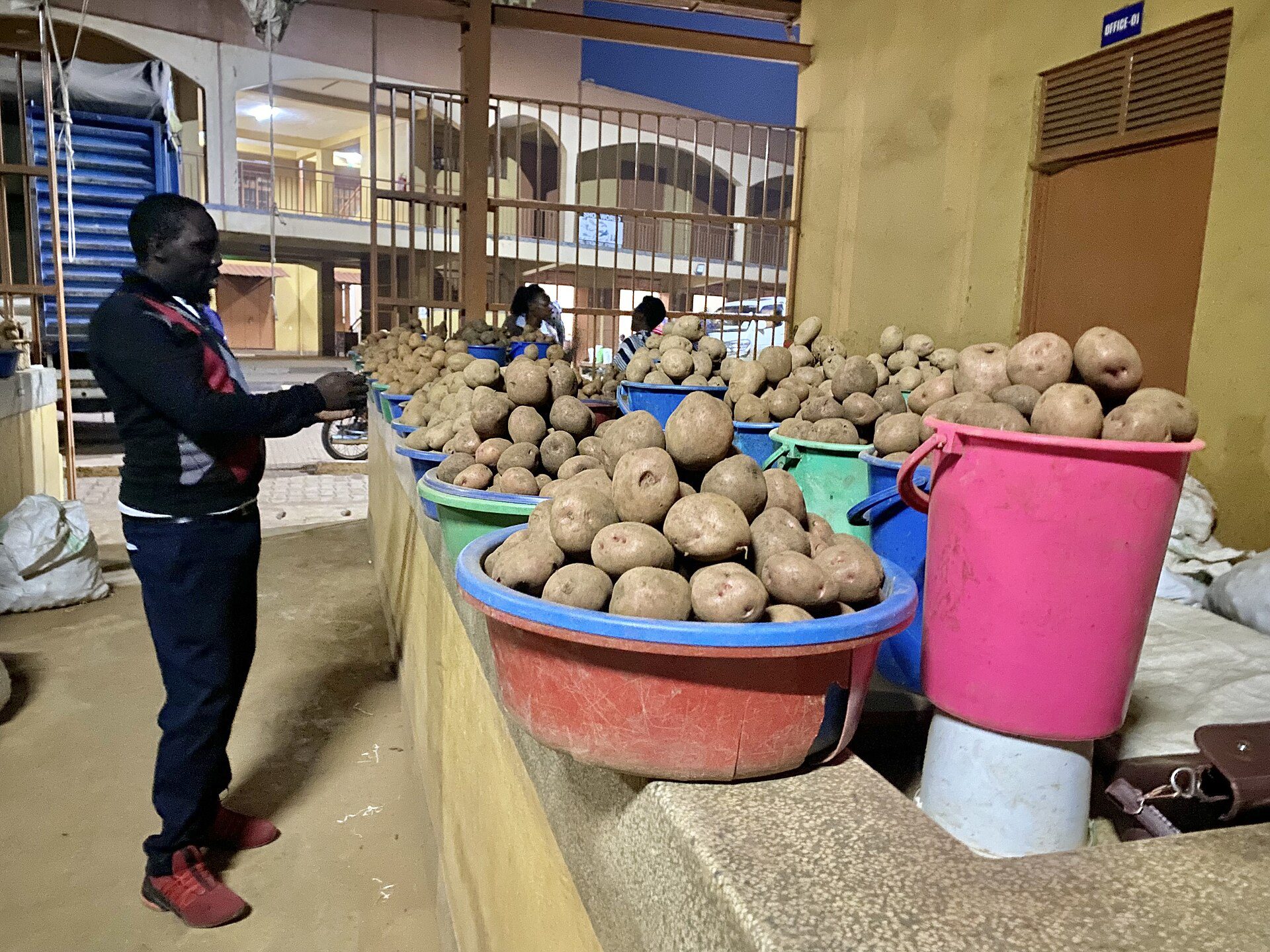
Kabale Irish Potato Market, western Uganda, 23 August 2025. Illustrative domestic-market file photograph, not a pictured cross-border consignment or a measure of the reported trade balance. Photo: B722N / Wikimedia Commons, CC BY-SA 4.0. Resized.
By inAfrika Newsroom
Uganda recorded a USD 808.97 million merchandise trade deficit with the East African Community in August 2026, according to Uganda Development Bank’s September digest. Regional imports of USD 1,050.26 million exceeded export earnings of USD 241.29 million, with Kenya and Tanzania accounting for most purchases.
The figures have returned to public attention through reporting published on 30 October. They describe August trade, not a new measurement of goods crossing borders in October.
The UDB digest, drawing on Bank of Uganda indicators, puts imports from Kenya at USD 714.47 million and imports from Tanzania at USD 203.61 million. Combined, those two partners supplied approximately 87.4% of Uganda’s reported EAC import bill.
Exports to Kenya were USD 41.05 million, while exports to Tanzania reached USD 13.81 million. Uganda nevertheless recorded surpluses with the Democratic Republic of Congo, South Sudan and Rwanda, showing why the regional total should not be read as a uniform result across neighbouring markets.
Our calculation from the digest’s totals puts regional export earnings at approximately 23% of regional import payments. That ratio is a description of merchandise flows for one month, rather than a measure of how much value Ugandan businesses create or retain across every regional supply chain.
The composition of imports also matters when interpreting the wider trade gap. Across Uganda’s formal private-sector imports, the digest identifies non-petroleum mineral products as the largest category, accounting for about 50.8% of the August bill; that national category breakdown should not be automatically assigned to individual EAC partners.
Different imports have different economic roles, and aggregate values alone do not distinguish consumption from inputs that support subsequent production or processing. Assessing industrial dependence requires commodity-level evidence, while assessing competitiveness requires more than one month of trade.
Tanzanian and Kenyan suppliers can use the figures as evidence of substantial existing trade relationships, but not as a forecast of guaranteed orders. The useful follow-up is whether the pattern persists and how product composition, prices and volumes change, alongside the region’s efforts to reduce documentary friction in commerce.
Have a verified news development or story? Send news submissions and supporting materials to news@inafrika.co.tz
Kenya plans November blind tastings to inform a national coffee flavour map due in 2027, linking sensory assessments with origins and production information.
The USD 1 billion programme shares risk on eligible trade-finance transactions. Its structure differs from an upfront cash disbursement or an automatic business loan.
KFS and KenTrade move regulated forest-product permits to the Trade Facilitation Platform from 31 October, while the applicable controls remain in place.

 English
 Swahili
 French
 Portuguese
 Chinese