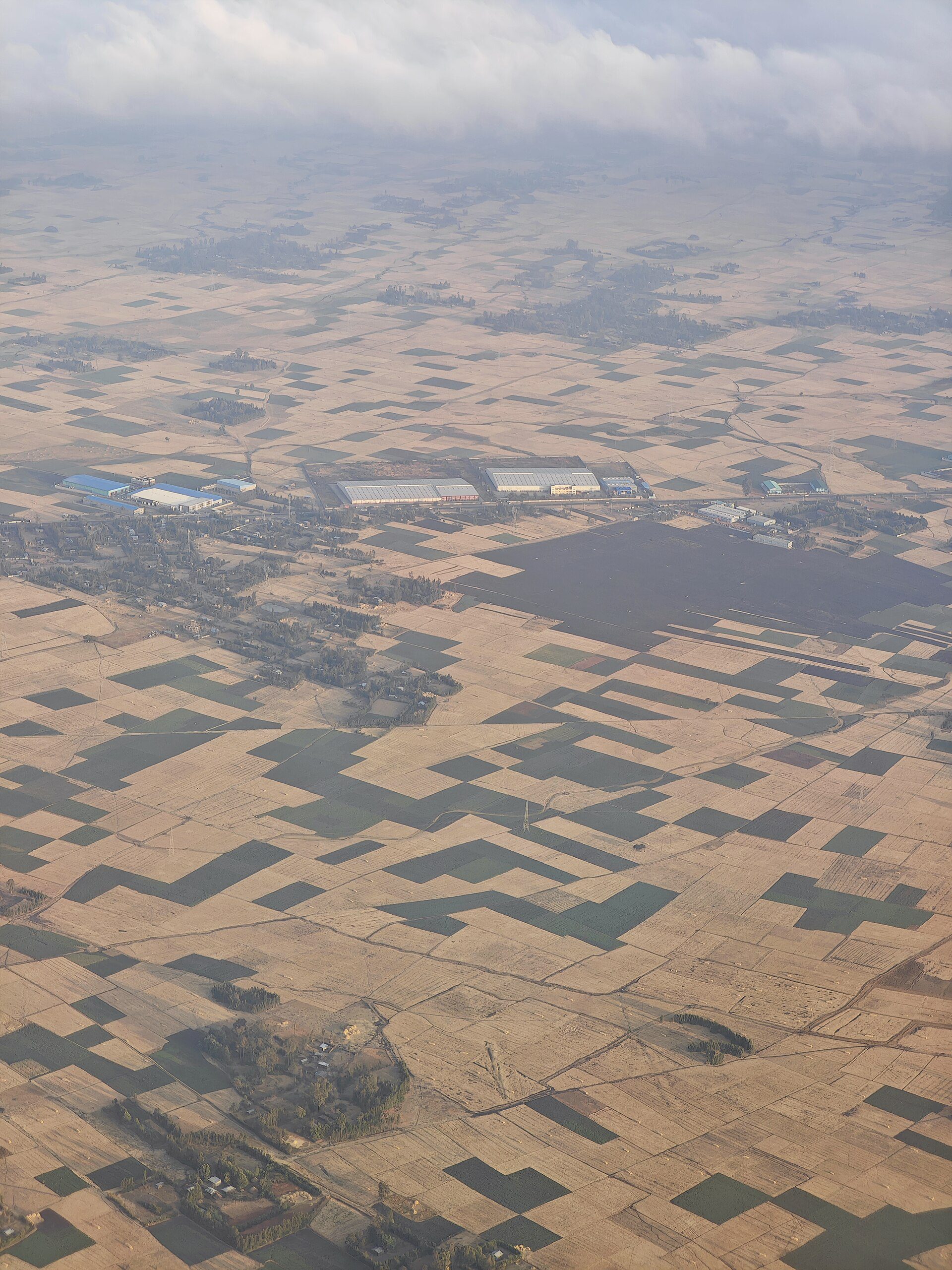
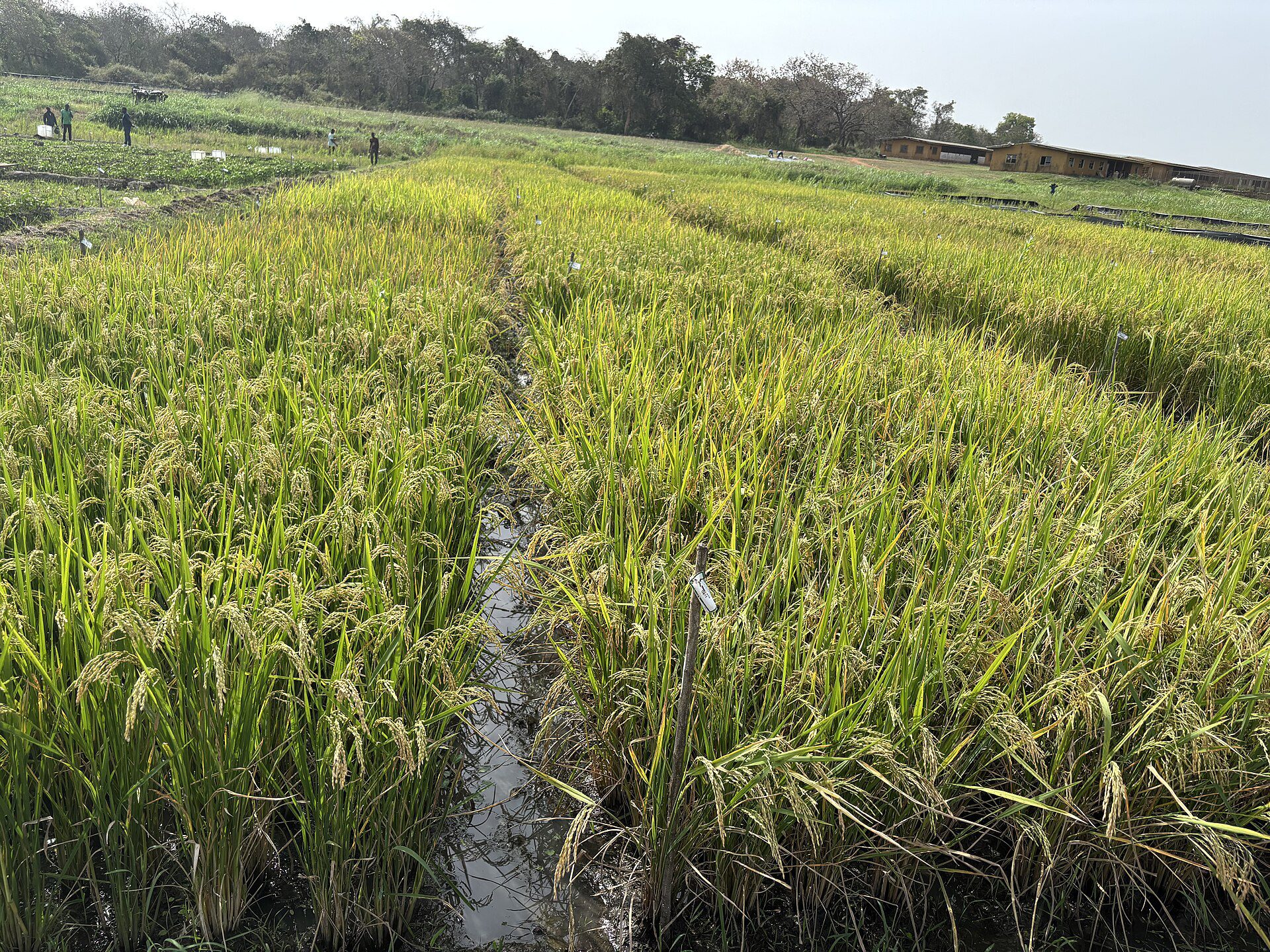
Cultivated fields southwest of Addis Ababa, Ethiopia, 23 December 2025. Illustrative file photograph; this landscape is not identified as a SAP073 project site. Photo: FrogsLegs71 / Wikimedia Commons, CC BY-SA 3.0. Resized.
By inAfrika Newsroom
Ethiopia has secured Green Climate Fund approval for a programme that combines solar water pumping, watershed restoration and livelihood support in drought-vulnerable communities. The project record lists a grant of approximately USD 25 million and USD 5 million in co-financing, making a total programme value of about USD 30 million.
Approval was recorded on 27 October and included in GCF’s 29 October account of its Board decisions. The SAP073 record still identifies implementation as not started, so the planned systems should not be reported as already installed.
The programme targets 15 kebeles, or local wards, across seven districts. Planned investments include 21 drinking-water systems and 150 irrigation pumping systems, using solar power to replace diesel pumping alongside improvements in land and watershed management.
Ethiopia’s Ministry of Finance leads the programme as a direct-access entity, with government co-financing described as mostly in kind. That distinction matters: an in-kind contribution can support delivery through resources or services, but should not be treated as an unrestricted cash payment available to households.
The design also provides for training, support for women and young people, and transfer of irrigation schemes to water-user associations. Those arrangements put local operating capacity alongside physical construction, rather than assuming that handing over equipment is the end of the investment.
A reliable water service requires working pumps, maintained pipes and agreed responsibilities when equipment fails. Solar power can change the energy bill, but households and farmers still need a practical arrangement for repairs, replacement parts and the allocation of water during dry periods.
The agricultural benefit likewise depends on more than the number of pumps procured. Water must arrive at the right time for a suitable crop, and producers need a viable route to buyers if additional output is to strengthen household income.
The next milestones are implementation arrangements, procurement and evidence that services remain functional. Those steps will distinguish approved adaptation finance from delivered resilience, alongside the region’s broader effort to make productive solar investment work for agriculture.
Have a verified news development or story? Send news submissions and supporting materials to news@inafrika.co.tz
Kenya plans November blind tastings to inform a national coffee flavour map due in 2027, linking sensory assessments with origins and production information.
Côte d’Ivoire’s agriculture ministry reports exploratory talks with Sinomach Hainan on seeds, mechanisation and rice processing, with no investment amount announced.

 French
 English
 Swahili
 Portuguese
 Chinese