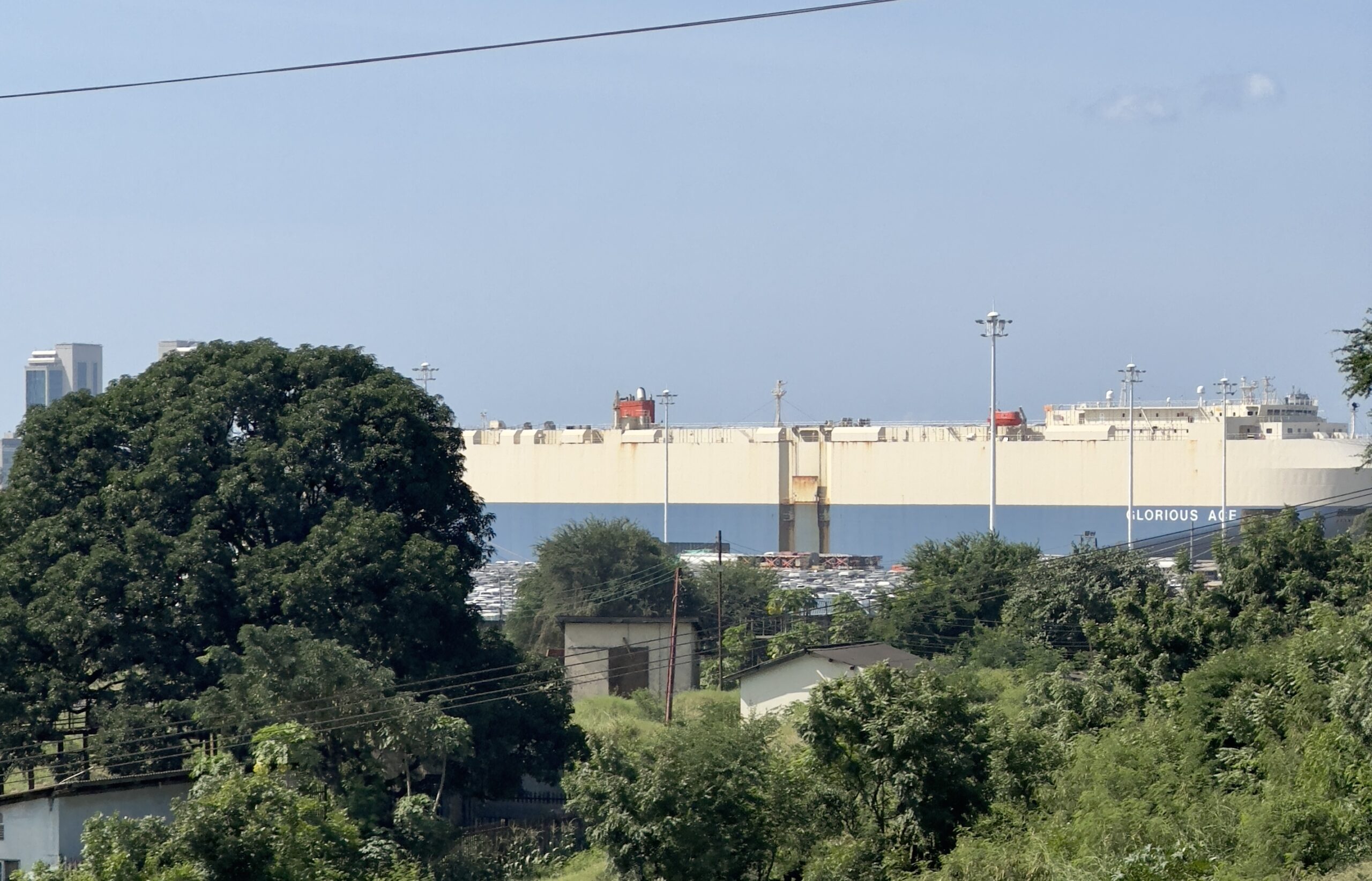
Dar es Salaam port, viewed from Kurasini, 23 June 2023. Illustrative file photograph; it does not document the October 2026 waiting times or identify a vessel affected by the advisory. Photo: Mangapwani / Wikimedia Commons, CC BY-SA 4.0. Resized.
By inAfrika Newsroom
Hapag-Lloyd’s Africa operational update dated 30 October reports berth waiting times at Dar es Salaam and longer delays on some Mombasa services. The carrier’s estimates offer a near-term planning signal for shippers, rather than a measurement of every vessel or terminal movement at either port.
At Dar es Salaam, the week 44 advisory puts waiting times at up to 24–48 hours for DP World and up to 48 hours for Adani, citing berth sequencing. It also identifies terminal-gate and road congestion as sources of additional delay.
The Mombasa assessment varies by service. Hapag-Lloyd reports average berthing delays of up to three days for EA2 and six days or more for other services, linking the situation to congestion, equipment shortages, transshipment volumes and vessels arriving outside their scheduled windows.
Those qualifications matter when comparing the ports. An upper waiting-time estimate for a terminal cannot be directly ranked against an average for a particular shipping service, and a vessel’s time awaiting a berth is only one part of a cargo’s overall journey.
The update also lists service changes around the start of November. KOTA SEMPENA is due to leave East Africa Service 3 at Nansha on 5 November, while Ever Brace is scheduled to join East Africa Service 2 at Nhava Sheva on 11 November; these are operating plans that can change.
Importers need to coordinate the latest vessel arrival information with document readiness, customs processing and inland transport. A truck dispatched against an outdated arrival estimate can wait unnecessarily, while cargo released before onward transport is ready can accumulate storage exposure.
Exporters face a related scheduling problem when arranging deliveries against vessel cut-off times. Perishable cargo requires particular care because a change in sailing or connection can affect refrigeration arrangements and the time available to reach its buyer.
The broader corridor-efficiency question therefore extends beyond berth capacity to how information and cargo move between ships, terminals and inland services. Shippers should confirm their own booking and connection with the carrier, since this dated advisory cannot establish the eventual delivery time or charges for an individual consignment.
Have a verified news development or story? Send news submissions and supporting materials to news@inafrika.co.tz
Kenya plans November blind tastings to inform a national coffee flavour map due in 2027, linking sensory assessments with origins and production information.
The USD 1 billion programme shares risk on eligible trade-finance transactions. Its structure differs from an upfront cash disbursement or an automatic business loan.
UDB’s digest records an August EAC merchandise deficit of USD 808.97 million. The figures show concentrated imports, with important limits to their interpretation.

 French
 English
 Swahili
 Portuguese
 Chinese