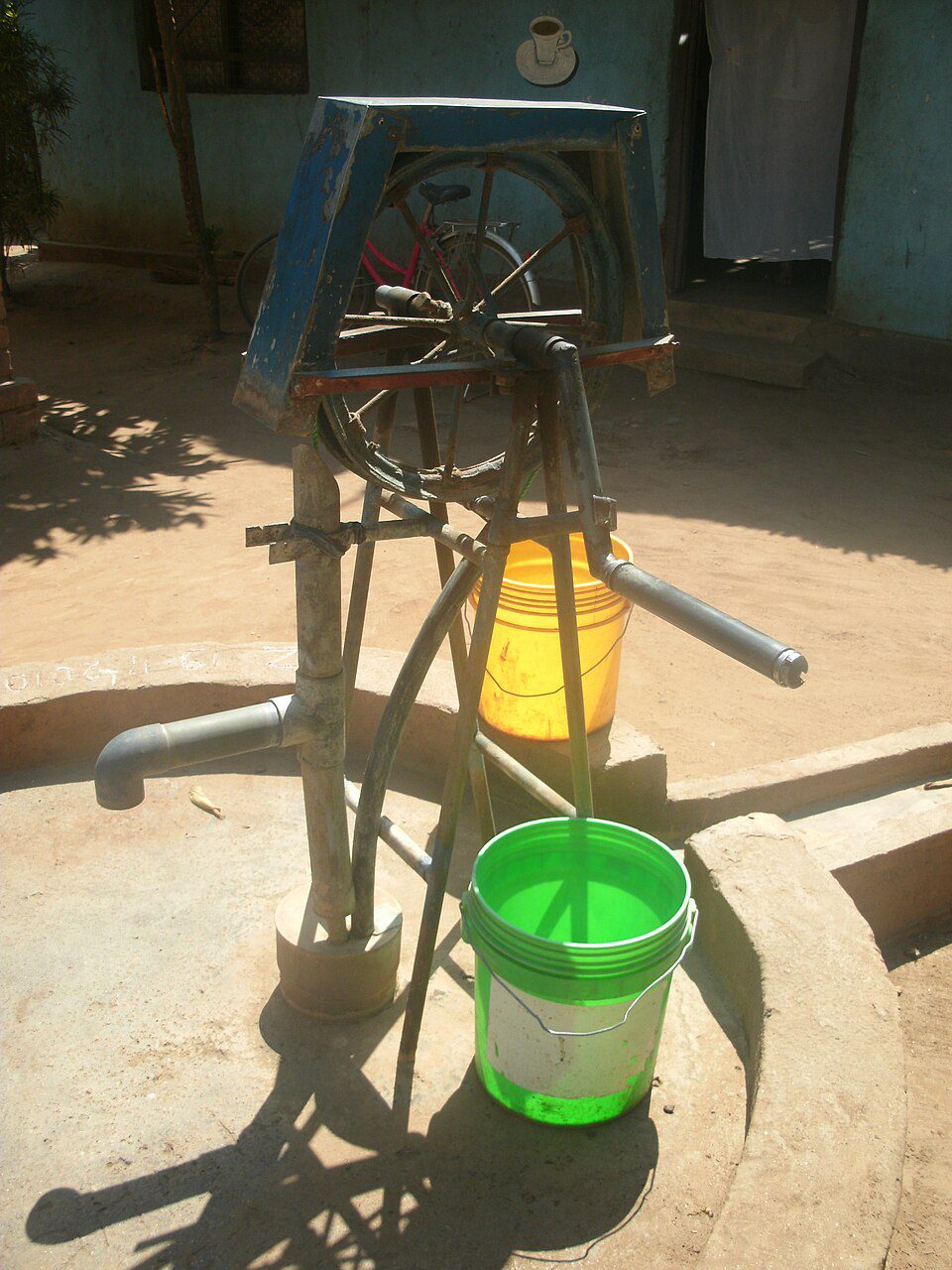
File photo: an MSABI water pump in Ifakara, Tanzania, photographed on 27 October 2015. The image illustrates water infrastructure; it does not document present service conditions or the EAC’s 2025 measurements.PHOTO | Paul2520, via Wikimedia Commons · CC BY-SA 3.0 · resized
By inAfrika Newsroom
Urban households in the East African Community were substantially more likely than rural households to collect safe drinking water within 30 minutes in 2025, according to figures cited by the bloc on 20 November.
The EAC Secretariat’s statement put urban access at 87% and rural access at 67%, a gap of 20 percentage points. Across the Community, the share was 70%, compared with 69% in 2022.
The contrast was wider in the Democratic Republic of the Congo: 90% for urban households against 43% for rural households. The Secretariat called for regular statistics to guide service investment.
Collection time does not establish that water is safely managed. The World Health Organization’s definition also requires an improved source at the premises, water available when needed, and freedom from faecal and priority chemical contamination. A reachable source and a reliable, uncontaminated household service are different measures.
Separately, the EAC cited safely managed sanitation rising from 26.9% of Tanzania’s population in 2020 to 39% in 2025. That indicator concerns toilet access and safe waste disposal or treatment; it should not be read as a drinking-water figure.
Have a verified news development or story? Send news submissions and supporting materials to news@inafrika.co.tz.
The Open Fibre Data Standard describes network locations, connections and ownership. It can clarify infrastructure records without proving a network is complete.
An €11.1m EU grant will support a terrestrial extension from Medusa’s Port Said landing to Jordan, separate from an EIB loan for the wider cable system.
EIB plans a critical-minerals financing announcement during a 25–26 November South Africa visit, alongside follow-up on existing transport and vaccine finance.

 Português
 English
 Kiswahili
 Français
 简体中文