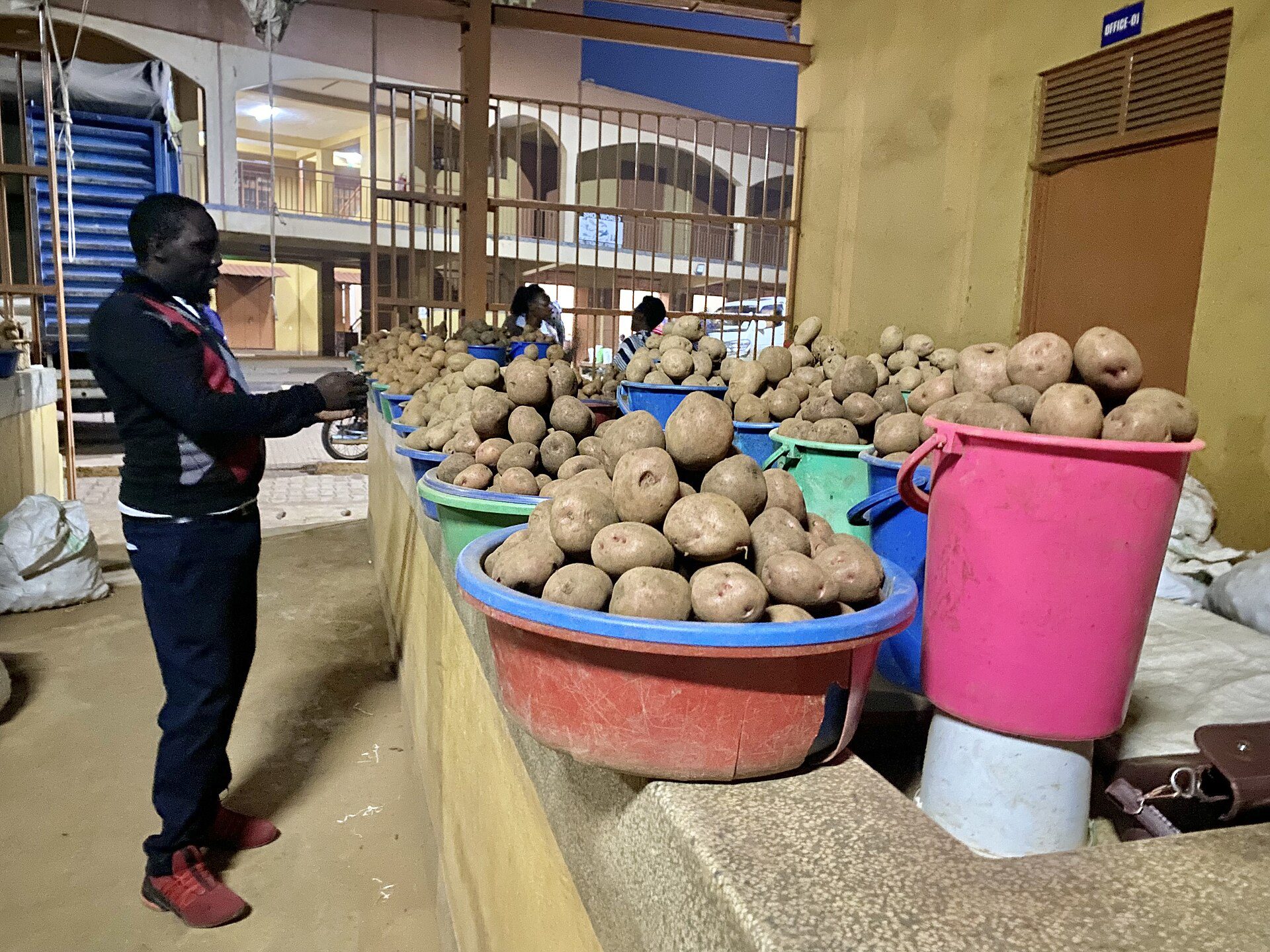
Fish preparation at Kivukoni Fish Market, Dar es Salaam, 29 April 2026. Illustrative file photograph; the worker is not identified as a study respondent or programme participant. Photo: Rwebogora / Wikimedia Commons, CC BY-SA 4.0. Resized.
By inAfrika Newsroom
A new FSD Tanzania account of fisheries financing points to a gap between business activity and access to borrowing. In the behavioural study it describes, 91 percent of respondents saved and 82 percent kept financial records, yet 47 percent had never borrowed.
The analysis published on 29 October draws on work with MicroSave Consulting and discussions at a financial partnership workshop held on 16 September. The percentages describe respondents in that study; they should not be treated as a measured borrowing rate for every fisheries operator in Tanzania.
FSDT said the wider programme was helping 5,224 fisheries actors become ready for financing. That programme total is separate from the study percentages, and the article does not establish that all participants had received loans.
The findings identify a practical question for lenders: what information is needed to assess an enterprise that trades regularly but has little conventional credit history? Savings and business records can provide useful evidence, although their existence does not automatically establish the ability to meet a particular repayment schedule.
Fisheries also combine different financing needs. A trader purchasing stock for daily resale faces a different cash-flow pattern from a processor acquiring refrigeration equipment or a fish farmer waiting for a production cycle to end.
Matching those needs to suitable repayment periods is as important as increasing the amount of credit available. Equipment finance, working capital, payments and insurance address different risks and should not be presented as interchangeable products.
The FSDT account calls for better sector data, partnerships and financial services that reflect how fisheries businesses operate. Its discussion also highlights digital transactions as a way to build records, alongside financial literacy and insurance suited to operational risks.
The relevance extends along the fisheries production and processing chain, where investment in inputs and equipment must be supported by viable sales. The next evidence of progress would be suitable products reaching businesses, affordable terms and repayment performance, rather than assuming that participation in training already represents financing secured.
Have a verified news development or story? Send news submissions and supporting materials to news@inafrika.co.tz
The USD 1 billion programme shares risk on eligible trade-finance transactions. Its structure differs from an upfront cash disbursement or an automatic business loan.
UDB’s digest records an August EAC merchandise deficit of USD 808.97 million. The figures show concentrated imports, with important limits to their interpretation.

 English
 Swahili
 French
 Portuguese
 Chinese